Sámara — the Guanacaste beach that families actually enjoy
Sámara is Guanacaste's most family-friendly beach: calm bay, gentle surf, and authentic Tico town life. Complete 2026 travel guide.
Top experiences nearby
Nosara: traditional Costa Rican cooking class and meal
Nosara catamaran sunset charter
Tamarindo estuary boat tour with naturalist guide
Tamarindo: horseback to Conchal Beach
Tamarindo: horseback to Tamarindo Beach
Tamarindo surf: learn and practice surfing
Quick facts
- Best time to visit
- December to April (dry season)
- Days needed
- 2 days
- Getting there
- 245 km from San José — 5 hours by car via Nicoya, or bus via Nicoya
- Budget per day
- USD 60 to 130
The beach that does not need to perform
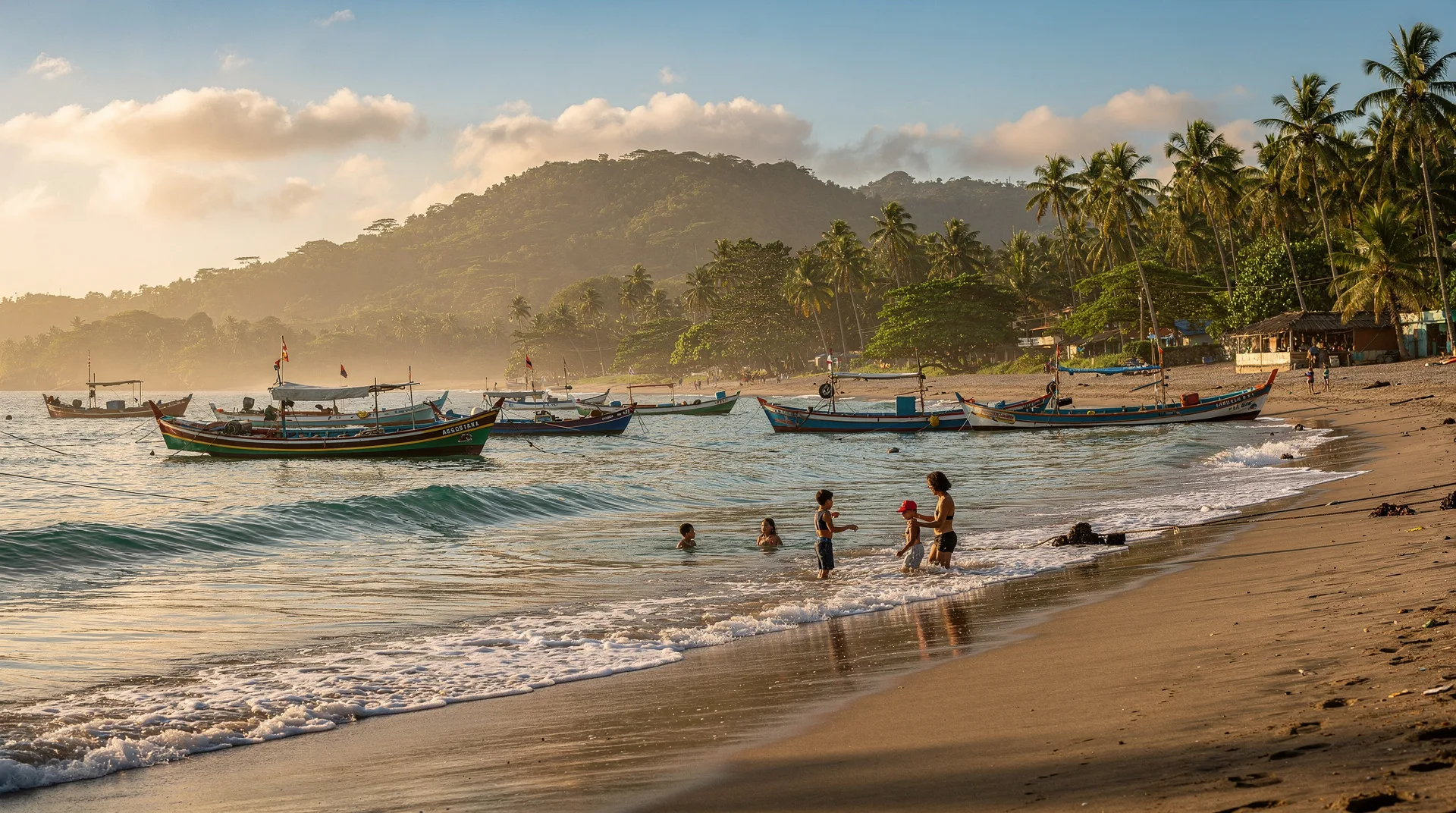
Sámara sits in a protected horseshoe bay on the Nicoya Peninsula, 245 kilometers from San José and about 36 kilometers south of Nosara. It is the kind of beach town that Guanacaste had more of twenty years ago — relaxed, Tico-majority, with palm trees growing to the water’s edge and fishing boats still parked on the sand beside tourist kayaks. There is no major resort complex here, no strip of chain restaurants, and — crucially for families — no significant shore break. The reef at the bay’s southern end deflects most ocean swell, leaving the main beach with consistently gentle waves that beginner surfers and small children can manage safely.
That natural calm is Sámara’s main selling point. It is not as dramatic as Tamarindo and not as polished as Playa Conchal, but it has something both of those places have lost: the feeling that the town exists for the people who live in it, not purely for the visitors who pass through.
The beach and swimming
Playa Sámara stretches about 1.5 kilometers in a gentle crescent. The water is shallow for 40 to 50 meters, making it genuinely suitable for children who cannot yet swim confidently. The sea floor is sand throughout — no rocks or urchins in the main swimming area. Rip currents are present but significantly calmer than at the open Pacific beaches to the north and south. The Sámara Lifeguard Association maintains a watch during peak hours from December through April.
The beach is wide enough that it never feels crowded even in high season. Vendors operate along the northern end near the parking area; the southern stretch toward the reef is quieter. Most accommodation is within a five-minute walk of the beach.
Surfing for beginners
Sámara’s waves are ideal for learning. The bay’s protection means consistent, manageable breaks that work for absolute beginners in December through April. Several local surf schools — including Sámara Surf School and C&C Surf School — offer two-hour group lessons for around USD 40 to 50 per person, with board rental included. Lessons typically run at 7:00 AM or 4:00 PM to avoid the midday heat and wind.
For instruction with more structure, Tamarindo has more schools and more consistent surf variety, but Sámara’s gentle environment is often better for complete beginners or children.
Tamarindo surf: learn and practice surfing — from $50Local cooking and the soda culture
Sámara’s main street has a concentration of sodas — family-run Costa Rican kitchens — that serve the best-value food in the area. Soda Deli Coopeguanacaste is a local institution: lunch plates with gallo pinto, fried fish, plantains, and salad run around USD 6 to 8. The fish is local, caught the same morning by boats visible from the beach.
For cooking classes using local ingredients, the Nosara cooking experience is close enough to combine with a day trip north.
Nosara: traditional Costa Rican cooking class and meal — from $95El Ancla is the best sit-down restaurant in town — good ceviche, grilled fresh catches, and a terrace that catches the evening breeze. For drinks after dinner, Bar Las Olas draws the local-and-visitor mix that keeps things from feeling either too touristic or too closed.
Sport fishing from Sámara
The waters off the Nicoya Peninsula hold sailfish, mahi-mahi, wahoo, and yellowfin tuna. While Sámara does not have a dedicated fishing charter fleet of the scale you find at Playa Flamingo, several local captains run half-day and full-day offshore trips. Prices typically run USD 400 to 600 for a private half-day charter from Sámara beach.
For a higher-spec charter with proper equipment and more consistent catch rates, the Guanacaste sport fishing fleet operates from multiple northern Guanacaste ports.
Costa Rica: sport fishing private boat charter (Guanacaste) — from $850Day trips from Sámara
Playa Carillo: 5 kilometers south, a wide palm-lined beach with almost no development. Calmer and even more beautiful than Sámara. Reachable by bicycle in 20 minutes or a short drive.
Isla Chora: A small island visible from the beach, reachable by kayak (rentals from USD 15 per hour). The island has a sandbar where rays are sometimes visible. Best at low tide.
Nosara: 36 kilometers north. The contrast is worth seeing — where Sámara is relaxed and family-oriented, Nosara is yoga-intensive and wellness-focused. Both beaches are on the same peninsula and easy to combine if you have a car.
Guanacaste inland: A car allows access to the dry forests and waterfalls around the Nicoya hills. The road between Sámara and Nosara via Garza is particularly scenic — dirt road but passable in a standard 2WD in dry season.
Where to stay
Mid-range: Villas Playa Sámara is the best-organized family-oriented property in town — individual bungalows, pool, and close beach access. Hotel Giada is a reliable Italian-owned hotel with a pool and good breakfast. Both charge USD 90 to 140 per night in high season.
Budget: Flying Crocodile Lodge, 4 kilometers north near Buenavista, is technically outside town but offers good value cabinas and ultralight flights over the coast (a genuine and affordable experience for aviation enthusiasts). In town, Hostal Matilori is clean and central at around USD 20 to 30 per dorm bed.
Rental houses: Sámara has a growing supply of weekly rental houses through VRBO and Airbnb — often better value than hotels for families, starting around USD 800 to 1,200 per week for a three-bedroom house with pool.
Getting there
From San José, the most comfortable route is via the Nicoya Peninsula ferry: drive (or take a bus) to Puntarenas, take the 1h20 ferry to Paquera (Naviera Tambor, around USD 25 per vehicle), then drive south 90 minutes to Sámara. Total: around 5 hours with good timing. Alternatively, the route via Liberia and Nicoya is longer (around 5.5 hours) but fully paved and reliable in any weather.
By bus: Direct services from San José’s Empresa Alfaro terminal (Terminal Coca Cola) to Sámara take 5 to 6 hours, about USD 8 to 10. One daily direct service plus connections via Nicoya.
Frequently asked questions about Sámara
Is Sámara safe for swimming with small children?
Yes — Sámara is one of the safest swimming beaches on the Pacific coast for young children. The bay creates a natural breakwater that keeps the waves small and the current mild. The sandy bottom and shallow water for 40 to 50 meters from shore make it suitable for non-swimmers with supervision. Even in high season, the waves are manageable for children aged 4 and older.
Does Sámara have good nightlife?
No, and this is part of its appeal. Sámara’s evening scene consists of a handful of bars — Bar Las Olas, Bar El Lagarto, and a few beach bars — with live music on weekends in high season. It winds down by midnight. For proper nightlife, Tamarindo (2.5 hours north by car) is the nearest option on the Guanacaste coast.
Is Sámara getting too touristy?
It is growing — new restaurants and guesthouses appear every year — but remains significantly more authentic than Tamarindo or Jacó. The resident Tico community outnumbers the expatriate and tourist population, which keeps the character intact for now. The lack of a major resort development has been the stabilizing factor.
Do I need a 4WD to reach Sámara?
For the main route via Nicoya and the paved road, a standard car is fine year-round. If you plan to explore secondary dirt roads around Garza, Ostional, or toward Nosara, a 4WD or SUV is recommended in the wet season (May through November) when some roads flood.
How to fit Sámara into your itinerary
Sámara works best as a two-night beach stop on a Nicoya Peninsula circuit combining Nosara and Tamarindo. The 5-day Guanacaste resort itinerary can include Sámara as the quieter alternative to the northern beach towns. Families doing a 10-day trip with La Fortuna and beach time should allocate two to three nights here.
Frequently asked questions
How many days do I need in Sámara?
2 full days covers the beach, a surf lesson, a kayak rental, and a sunset at one of the waterfront bars. Add a third day for a day trip to the Ostional Wildlife Refuge (40 km north) during olive ridley turtle nesting season (August to December) or to explore the mangroves by the river mouth south of the bay.
What's the best time to visit Sámara?
December to April is the reliable dry season — sunny mornings, hot afternoons, and calm bay water that is genuinely swimmable for children. The shoulder months of May and November offer the beach without the crowds and with 15–25% lower accommodation rates. July to October is greener but wetter, though Sámara's protected bay means waves stay manageable even in the wet season, unlike exposed Pacific beaches.
Is Sámara good for beginner surfers?
Yes — it is one of the best beginner surf beaches in Guanacaste. The bay's natural reef dampens most ocean swell, leaving a gentle rolling break that is forgiving for first-timers. Several well-reviewed surf schools operate on the beach with 2-hour lessons typically priced at $50–65 including board rental. The beach works in the morning before onshore winds arrive around noon; afternoons are typically choppy.
How do I get from San José to Sámara, and how long does it take?
The drive is 245 km and takes approximately 4.5 to 5 hours via the Nicoya Peninsula bridge at Tempisque. The most scenic route goes via the Friendship Bridge (Puente de Amistad) — avoid the Paquera ferry route unless you are already on the southern Nicoya. Alfaro buses depart San José's main terminal daily for around $8 and take about 5 hours. Shared shuttles cost $45–60 per person.
Is Sámara a good base for exploring the Nicoya Peninsula, or should I stay in Nosara or Tamarindo instead?
Sámara makes a reasonable central base for day trips to Nosara (36 km north, 1 hour on a partly unpaved road) and Ostional (40 km north). Tamarindo is 100 km north and 2.5 hours away — too far for a day trip. Sámara's main limitation as a base is the road network: most roads on the Nicoya Peninsula are unpaved, requiring 4WD and adding travel time. If maximizing day-trip range is a priority, Nosara or Tamarindo are better hubs.